Archive for July, 2009
For the last few weeks we’ve been reading stories in the news about Michael Vick’s release, and how he is awaiting a decision from the NFL about his future career, and waiting to see if a team will be offering him a position. Simultaneously we have been reading stories on BestFriends.org about how the dogs that they acquired after the raid on Michael Vick’s dog fighting ring are now finally beginning to be adopted into new forever homes.
We are happy to report now that Best Friends Animal Society has received a National Award from the U.S. Justice Department for its “outstanding work with the dogs on the Bad Newz Kennels (the Michael Vick case).â€
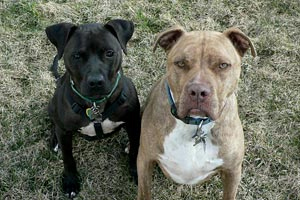 Best Friends took in half of the dogs that were seized, dogs that would have otherwise been destroyed. Instead they have spent two years in beautiful Angel Canyon in Kanab Utah to be rehabilitated under the amazing, loving care of the workers and volunteers there who dubbed them the “Vicktory Dogs.” And recently, finally some of them have been declared adoptable!
Managers at Best Friends hope that this will bring more attention to the issue of dog fighting (just as another, even larger dog fighting ring was exposed recently); as well as bring a new perspective on American pit bull terriers.
Michael Vick will now have to begin his “community service” working with the ASPCA on their anti dog fighting campaign. But can he be rehabilitated as well as the dogs that he is responsible for torturing?
Time will tell, but we certainly hope they won’t make it easy for him.
We received the following announcement via email from Mars Veterinary and are excited about it because we spoke directly to Dr. Neale Fretwell, PhD personally back when little Kylie had her DNA test done. We had lots of questions about the results and he was very kind to explain them in great detail.
Besides, this sounds very interesting:
Tune in on Wednesday, July 22nd to see Mars Veterinary’s Chief Geneticist Dr. Neale Fretwell, PhD and the mixed-breed DNA test Wisdom PanelTM MX in The History Channel’s hit show MonsterQuest. The 60 minute episode, titled “The Real Cujo,” focuses on feral dog packs in the United States and what breeds or traces of breeds are seen in some of these packs of dogs.
Dogs are known as man’s best friend. Originally descended from wolves, domesticated dogs were brought to the United States 12,000 years ago. Today, more and more dogs are being turned loose on the streets and returning to their wild roots.
In this episode, MonsterQuest launches a search to follow these feral packs, using Dr. Fretwell’s genetic expertise to trace their breed history using Wisdom Panel, and wolf expert Peggy Callahan to unlock the dog’s behavioral traits. Wisdom Panel was developed by Mars Veterinary and is the leading genetic test that allows pet owners, veterinarians and care providers to gain insight into the genetic make-up of their individual mixed-breed dog.
MonsterQuest airs on July 22nd at 9:00 p.m. EST. Click on the following link to find your local listing http://www.history.com/search.do?action=scheduleSearch&searchText=MonsterQuest
…….
PS: From July 22 – Aug 4 you can have the Wisdom Panel MX (aka, Doggie DNA test) done on your mixed breed dog for only $99. But its only available online (Promotion Code HISTORY99) visit WisdomPanel.com for more information.
Yahoo! News confirms what you’ve always suspected.. yes your cat is controlling your mind!:
If you’ve ever wondered who’s in control, you or your cat, a new study points to the obvious. It’s your cat.
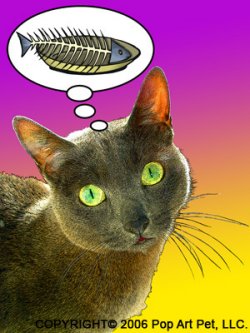 Household cats exercise this control with a certain type of urgent-sounding, high-pitched meow, according to the findings. This meow is actually a purr mixed with a high-pitched cry. While people usually think of cat purring as a sign of happiness, some cats make this purr-cry sound when they want to be fed. The study showed that humans find these mixed calls annoying and difficult to ignore.
“The embedding of a cry within a call that we normally associate with contentment is quite a subtle means of eliciting a response,” said Karen McComb of the University of Sussex. “Solicitation purring is probably more acceptable to humans than overt meowing, which is likely to get cats ejected from the bedroom.”
They know us
Previous research has shown similarities between cat cries and human infant cries. McComb suggests that the purr-cry may subtly take advantage of humans’ sensitivity to cries they associate with nurturing offspring. Also, including the cry within the purr could make the sound “less harmonic and thus more difficult to habituate to,” she said.
McComb got the idea for the study from her experience with her own cat, who would consistently wake her up in the mornings with a very insistent purr. After speaking with other cat owners, she learned that some of their cats also made the same type of call. As a scientist who studies vocal communication in mammals, she decided to investigate the manipulative meow.
Tough to test
Setting up the experiments wasn’t easy. While the felines used purr-cries around their familiar owners, they were not eager to make the same cries in front of strangers. So McComb and her team trained cat owners to record their pets’ cries – capturing the sounds made by cats when they were seeking food and when they were not. In all, the team collected recordings from 10 different cats.
The researchers then played the cries back for 50 human participants, not all of whom owned cats. They found that humans, even if they had never had a cat themselves, judged the purrs recorded while cats were actively seeking food – the purrs with an embedded, high-pitched cry – as more urgent and less pleasant than those made in other contexts.
When the team re-synthesised the recorded purrs to remove the embedded cry, leaving all else unchanged, the human subjects‘ urgency ratings for those calls decreased significantly.
McComb said she thinks this cry occurs at a low level in cats’ normal purring, “but we think that cats learn to dramatically exaggerate it when it proves effective in generating a response from humans.” In fact, not all cats use this form of purring at all, she said, noting that it seems to most often develop in cats that have a one-on-one relationship with their owners rather than those living in large households, where their purrs might be overlooked.
The results were published in the July 14 issue of the journal Current Biology.
…………..
If you’re interested in a custom cat (or dog) portrait to portray what’s really on your pet’s mind, check out our collection of Comic Style portraits and order yours today!
We fount these statistics for 2008 on the website for the Humane Society of the US and found them very interesting.
Did you know?…
Dogs
* There are approximately 74.8 million owned dogs in the United States 
* Thirty-nine percent of U.S. households own at least one dog
* Most owners (63 percent) own one dog
* Twenty-five percent of owners own two dogs
* Twelve percent of owners own three or more dogs
* On average, owners have almost two dogs (1.7)
* The proportion of male to female dogs is even
* Ten percent of owned dogs were adopted from an animal shelter
* On average, dog owners spent $219 on veterinary visits (vaccine, well visits) annually
* Seventy-five percent of owned dogs are spayed or neutered
Cats
* There are approximately 88.3 million owned cats in the United States  
* Nearly 34 percent of U.S. households (or 38.4 million) own at least one cat
* Fifty-six percent of owners own more than one cat
* On average, owners have two cats (2.3)
* More female cats are owned than male cats (73 percent vs. 63 percent respectively)
* Eighteen percent of owned cats were adopted from an animal shelter
* Cat owners spent an average of $175 on routine veterinary visits
* Eighty-seven percent of owned cats are spayed or neutered
These statistics were compiled from the American Pet Products Manufacturers Association (APPMA) 2007-2008 National Pet Owners Survey.
We would really like to see that percentage of dogs and cats adopted from an animal shelter go way up.. So please when it comes to pets, ADOPT, don’t shop!
Have you heard of BoingBoing.net? They call themselves “A Directory of Wonderful Things” and really there’s no better way to explain it.. except maybe A Collection of Random Cool Stuff! Well they just posted this video of the father of Pop Art himself, Andy Warhol, painting Blondie (aka, Debbie Harry) on an Amiga computer in 1985.
How cool is that?!
Well Andy always was ahead of his time! He was even the first to create exciting, colorful Pop Art using a computer!
Two dozen years later, here we are using Andy Warhol’s influence and photos of your pet to create exciting, colorful custom Pop Art using a computer.

