Archive for August, 2009
We found this on BoingBoing.net, one of our favorites, and thought it was amusing and very enterprising!:
Atheists who’ll take in your pets after the Rapture
Will sends us “a site of avowed atheists who will, for a nominal fee, look after your pet when you have taken in the rapture.”
We are a group of dedicated animal lovers, and atheists. Each Eternal Earth-Bound Pet representative is a confirmed atheist, and as such will still be here on Earth after you’ve received your reward. Our network of animal activists are committed to step in when you step up to Jesus.
We are currently active in 20 states and growing. Our representatives have been screened to ensure that they are atheists, animal lovers, are moral / ethical with no criminal background, have the ability and desire to rescue your pet and the means to retrieve them and ensure their care for your pet’s natural life.
————–
Without adding any potentially non-pc commentary, we have to admit.. this is a brilliant idea, and no matter which side of the issue you’re on it makes total sense!
Dogster.com consulted San Francisco based professional pet photographer, Mark Rogers to provide this list. And since we’re frequently giving our clients advice on how to take good quality photos, we thought we should share it:
Other than baby photos, pictures of pets are among the most popular in any household. Unfortunately, they also tend to suffer the most from poor quality or, as we term it in the trade, snapshot-itis. You may have this problem if friends start walking away fast when you mention the latest photos of your cat or if your dog’s loving brown eyes end up glowing green like some malevolent demon in every shot you take.
Well, here are 5 surefire tips to help avoid snapshot-itis
1) Change angles
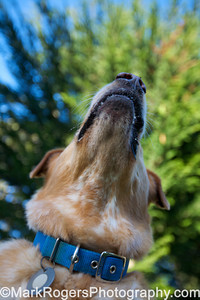 Most pet photos are taken from the perspective of a human being looking down while the pet looks up. Bor-rinnnnnng! Try something different and get down at their level or, if they’re moving, pan with them as you take the shot.
2) Stick with natural light. Turn off or cover the on-camera flash
On-camera flashes are evil. They flatten everything out, cast harsh shadows and are the source of the infamous glowing green pet eyes. If you have to use a flash go with an off-camera one and bounce the light off a ceiling or wall.
3) Stay out of direct sun and shoot in the morning or late afternoon
Contrary to popular belief, bright sunlight is not a photographers friend. It wreaks havoc with your exposure and you typically end up with lots of nasty shadows in places you don’t want them. I avoid photographing subjects outside in direct light except first thing in the morning or in the late afternoon before sunset when the light is angled low.
4) Don’t wait for the perfect moment and don’t be afraid to take lots of shots but…
Most of us are shooting digital these days so you can essentially take as many pictures as you want. With pets, unpredictability is the rule of law. You never know how a shoot is going to go. All you can do is be there and hope you catch the moment. This requires taking a lot of shots in quick sequence and culling through them later for the best one.
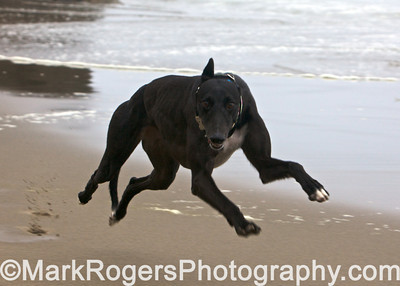
5) …make sure you edit yourself
Some of the most important work happens after you shoot. It sounds cliche but less is more. It’s easy to become enamored of the 100 pictures you took of Spot playing with his new ball but chances are your friends won’t feel the same way. Limit what you show people to only the very best.
———–
We also have a set of Photo Tips designed to help you take an ideal picture of your pet for the purpose of having on of our custom pet portraits created. Some of the suggestions are similar and some are quite different from these. Be sure and check them out if you’re considering a portrait for yourself or a gift!
We saw this story on Yahoo! News and thought.. “now tell us something we don’t know.” :) But the scientific evidence is very interesting:
The canine IQ test results are in: Even the average dog has the mental abilities of a 2-year-old child.
The finding is based on a language development test, revealing average dogs can learn 165 words (similar to a 2-year-old child), including signals and gestures, and dogs in the top 20 percent in intelligence can learn 250 words.
And the smartest?
Border collies, poodles, and German shepherds, in that order, says Stanley Coren, a canine expert and professor emeritus at the University of British Columbia. Those breeds have been created recently compared with other dog breeds and may be smarter in part because we’ve trained and bred them to be so, Coren said. The dogs at the top of the pack are on par with a 2.5-year-old.
Better at math and socializing
While dogs ranked with the 2-year-olds in language, they would trump a 3- or 4-year-old in basic arithmetic, Coren found. In terms of social smarts, our drooling furballs fare even better.
“The social life of dogs is much more complex, much more like human teenagers at that stage, interested in who is moving up in the pack and who is sleeping with who and that sort of thing,” Coren told LiveScience.
Coren, who has written more than a half-dozen books on dogs and dog behavior, will present an overview of various studies on dog smarts at the American Psychological Association’s annual meeting in Toronto.
“We all want insight into how our furry companions think, and we want to understand the silly, quirky and apparently irrational behaviors [that] Lassie or Rover demonstrate,” Coren said. “Their stunning flashes of brilliance and creativity are reminders that they may not be Einsteins but are sure closer to humans than we thought.”
Math test
To get inside the noggin of man’s best friend, scientists are modifying tests for dogs that were originally developed to measure skills in children.
Here’s one: In an arithmetic test, dogs watch as one treat and then another treat are lowered down behind a screen. When the screen gets lifted, the dogs, if they get arithmetic (1+1=2), will expect to see two treats. (For toddlers, other objects would be used.)
But say the scientist swipes one of the treats, or adds another so the end result is one, or three treats, respectively. “Now we’re giving him the wrong equation which is 1+1=1, or 1+1=3,” Coren said. Sure enough, studies show the dogs get it. “The dog acts surprised and stares at it for a longer period of time, just like a human kid would,” he said.
These studies suggest dogs have a basic understanding of arithmetic, and they can count to four or five.
Basic emotions
Other studies Coren notes have found that dogs show spatial problem-solving skills. For instance, they can locate valued items, such as treats, find better routes in the environment, such as the fastest way to a favorite chair, and figure out how to operate latches and simple machines.
Like human toddlers, dogs also show some basic emotions, such as happiness, anger and disgust. But more complex emotions, such as guilt, are not in a dog’s toolbox. (What humans once thought was guilt was found to be doggy fear, Coren noted.)
And while dogs know whether they’re being treated fairly, they don’t grasp the concept of equity. Coren recalls a study in which dogs get a treat for “giving a paw.”
When one dog gets a treat and the other doesn’t, the unrewarded dog stops performing the trick and avoids making eye contact with the trainer. But if one dog, say, gets rewarded with a juicy steak while the other snags a measly piece of bread, on average the dogs don’t care about the inequality of the treats.
Top dogs
To find out which dogs had the top school smarts, Coren collected data from more than 200 dog obedience judges from the United States and Canada.
He found the top dogs, in order of their doggy IQ are:
Border collies Poodles German shepherds Golden retrievers Dobermans Shetland sheepdogs Labrador retrievers
At the bottom of the intelligence barrel, Coren would include many of the hounds, such as the bassett hound and the Afghan hound, along with the bulldog, beagle and basenji (a hunting dog).
“It’s important to note that these breeds which don’t do as well tend to be considerably older breeds,” he said. “They were developed when the task of a hound was to find something by smell or sight.” These dogs might fare better on tests of so-called instinctive intelligence, which measure how well dogs do what they are bred to do.
“The dogs that are the brightest dogs in terms of school learning ability tend to be the dogs that are much more recently developed,” Coren said. He added that there’s a “high probability that we’ve been breeding dogs so they’re more responsive to human beings and human signals.” So the most 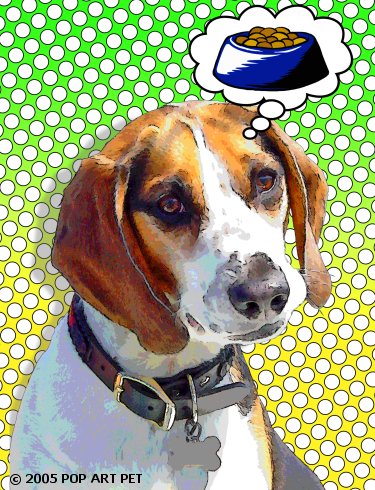 recently bred dogs would be more human-friendly and rank higher on school smarts.
Many of these smarty-pants are also the most popular pets. “We like dogs that understand us,” Coren said.
We also love the beagle, which made it to the top 10 list of most popular dog breeds in 2008 by the American Kennel Club. That’s because they are so sweet and socialable, Coren said. “Sometimes people love the dumb blonde,” Coren said.
And sometimes the dim-wits make better pets. While a smart dog will figure out everything you want it to know, your super pet will also learn everything it can get away with, Coren warns.
—————————
Sorry Beagles, I guess we do know exactly what you’re thinking!
A week or so ago we did a long overdue remodel of our blog. Before, for years, it looked like this..
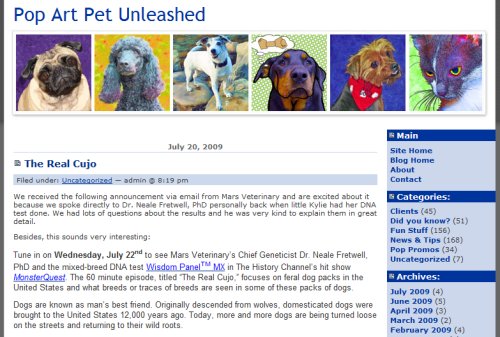
Now, After, it matches the rest of site really well. And of course our beautiful Kylie is still here, with us as always (at the top, asking “What’s new?”).
If you’re not really familiar with the rest of the site, take a look around particularly at our custom pet portrait Example Galleries.
If you are familiar with our site and our Andy Warhol style animal artwork, you should check out our Custom Pet Portrait section to see what else we can do with your pet’s photos.
..like a chart topping Album Cover,

..or a dramatic Filmstrip.
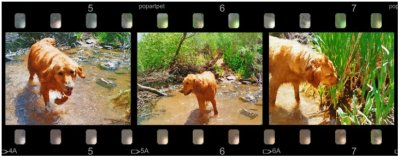
We’re not just your pet Pop Art source; we encourage you to use your imagination – and ours! Just contact us with your custom order or ideas.
We just read a brief article on tips to save money on pet supplies and pet services. Like buying pet food in bulk is typically more cost effective, and keeping up with vaccinations and heartworm preventative not only keeps your pet healthy but helps you avoid potentially costly treatments down the line.
But the fun part of the money saving suggestions was to make your pet some toys at home that will be just as entertaining for them as the expensive ones at the pet store. For example you can make a simple food or treat dispensing toy of your own by filling an empty (clean) soda bottle with food or treats. It may take them an hour of nosing it around before they get all the goodies out. If your dog is a chewer, just be sure you don’t leave them unattended with it. Or if you have some old fabric in a craft bin somewhere you can tear it into strips, tie a knot in one end, braid the strips, then tie a knot at the other end and you’ve got a homemade tug toy.
For cats, just turn over a wine cork or the plastic lid from a carton of milk, or never underestimate a good old fashioned ball of yarn.
It’s not the money spent that makes it fun for them, it’s your interaction and their imagination. And remember, walks are free!

