Well here in Denver we haven’t had snow in over a week, and that hasn’t happened in months, and Daylight Savings Time starts this weekend, so Spring must be upon us. Which means it’s time to take precautions to protect yours and other neighborhood pets and animals from the dangers lurking in your innocent looking garden.
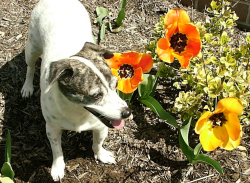 Animals that chew can get hold of poisonous seeds, leaves or berries. Dogs or cats that frolic or roll on the lawn can pick up toxic chemicals through their paw pads and skin and track them into the house. They can get scratched by thorns, stung by bees, bitten by fleas, landed on by ticks. People who love pets and gardening can have both, though, with a little common sense and careful use of pet-safe plants and chemicals.
The first good-sense rule is not to plant anything that’s toxic to animals. Toxicity can relate to the size of the animal and, of course, amount of material ingested, but it’s better to avoid anything that can be harmful. A sampling of landscape plants that are toxic include yew, wild black cherry, azalea, rhododendron, hydrangea, daphne, nandina, oleander, English ivy, daffodil, tulip, lily of the valley, foxglove, hyacinth, rhubarb and castor bean. Some toxic houseplants to avoid are dracaena, dieffenbachia, golden pothos, philodendron and peace lily. Cocoa bean mulch, a byproduct of chocolate manufacturing, contains both caffeine and theobromine, which are harmful to dogs.
If you already have some of these trees, shrubs or plants, you can minimize exposure by fencing them off, or by teaching the pet to avoid parts of the yard.
For lists of toxic plants, see www.cybercanine.com/toxicplants.htm or www.aspca.org. (Click on the link to Animal Poison Control and then click toxic plants.)
The next issue to consider is chemicals. The ingredients in herbicides, insecticides and soil amendments can be toxic. If they are, the package directions should say so. Some products are labeled as pet-safe; they may be based on ingredients such as corn gluten or seaweed.
You might think that the best course is to go organic, but not all organics are a good idea. For instance, one organic method to add phosphorus to soil is as pulverized bone meal. Dogs love bones, so they will lick this material. Generally, they won’t lick enough to hurt themselves, but if they get into the bags, they will wolf down enough to be dangerous. Products may not list some trace materials, such as heavy metals that may be present in the plant and animal byproducts and volcanic ash, ingredients in such all-natural fertilizers.
One common household product that makes a good organic fertilizer is used coffee grounds. But this is not good for your pet. For more possible problems, see the American Veterinary Medical Association’s website.
To keep pests in check, use integrated pest-management techniques, including improving soil and drainage conditions, using beneficial insects to fight harmful ones, applying the least toxic remedies for pests and diseases, and pulling or hoeing weeds.
If a potentially more harmful substance is required for the health of your garden, keep pets (and children) away from areas being treated. One source, “The First Aid Companion for Cats and Dogs,” suggests keeping pets off sprayed surfaces for a week.
And, speaking of things to avoid, if winter lingers be sure and watch out for hazards such as street salt spread on drives or walks; wipe pets’ paws before they come inside. And remember, antifreeze is also hazardous any time of year.
Happy Spring!

