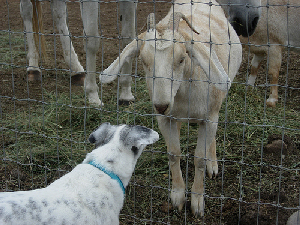
For the long holiday weekend we made a trip to the mountains with a house full of friends to stay at a B&B on Angel Ridge Ranch. We all had a nice time, especially Kylie who had her first face-to-face with a goat!
The ranch is also home to Challenging Spirits Equine Rescue. The owner Denise takes in homeless horses from all over the world and cares for them with the help of volunteers until they find a home. She also rescues horses that are bred for Premarin, a very popular drug used to treat menopausal symptoms in women. Because Premarin is made with estrogen extracted from pregnant mare’s urine (PMU), thousands of mares are used to produce this bitter pill, contributing to the unnecessary overbreeding of horses.
For approximately six months from fall through spring, the pregnant mares live in the “pee barns” forced to stand in stalls with urine collection devices strapped to them. The stalls are deliberately narrow to prevent pregnant mares from turning around and detaching the collection cups. In the last month of their 11th month pregnancy,the mares are put out to pasture to have their foals. The mares are put in a herd with a stallion so they quickly become pregnant again. In the fall their foals are quickly taken away from them to be sold, whether or not they are fully weaned. The next month they are back in the barns, and the cycle starts again.
The manufacturers of PMU drugs would like us to believe that every single foal born as a result of these pregnancies is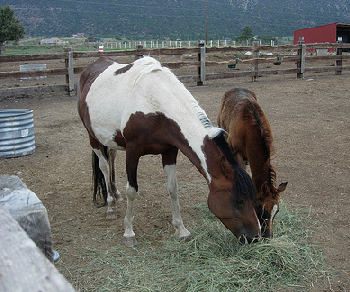 sold to be used for companionship, recreation, ranching, shows and competitions–what they call “productive markets”. In reality, the fillies grow up to replace their worn-out mothers. The colts fates are already sealed. The horse market is over saturated as it is, and there aren’t enough homes for another estimated 5,000 born from this industry every year. As a result, PMU foals are at risk for slaughter, their meat shipped to Europe and Japan for human consumption.
We were amazed at how many horses there were, it’s hard to believe such beautiful creatures could be unwanted. We were also amazed at how much work is involved! If you’re in southwest Colorado and would like to volunteer, please visit challengingspirits.com. Or if you’re unable to physically volunteer, donations are very welcome and very needed, and can be made online.

