When the weather was hot we provided some tips and advice on how to keep your pets cool and comfortable and safe. Well, now the seasons have certainly changed and the cold can be just as dangerous for dogs as the heat, especially for senior dogs. Here are some easy ways to keep your old friend cozy and comfortable this winter.
Healthy dogs with longer coats are able to maintain their body temperature during colder weather; but certain breeds, such as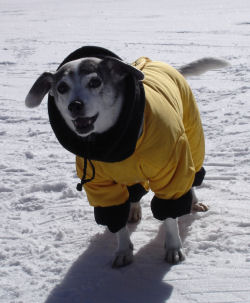 Greyhounds, Labs, and other short-haired breeds may need some extra help. Dogs with thinner coats and lower body fat content benefit from wearing a coat. Even with a warm sweater or jacket, however you should restrict your dog’s outdoor exercise during extremely cold weather (15 degrees fahrenheit or lower).
When there’s a lot of snow on the ground, be sure and clear a potty area for your dog, and provide older pets, especially those with arthritis, a warm sleeping area indoors away from drafts to prevent aching, stiff joints.
Make sure to check your dog’s paws after outdoor romps in cold weather and remove any salt, ice, or snow. You should also keep the hair around their paws trimmed to prevent snow and debris from sticking, because it can be very uncomfortable and cause more serious problems with their pads if ignored. Some vets recommend using dense, wax-based creams on dogs’ paw pads to prevent cracking and irritation from ice and ice-melting chemicals.
Cold weather can make certain medical conditions in older pets worse, such as hypothyroidism, a disorder in which the thyroid gland secretes insufficient amounts of hormones. If your dog gains weight during the winter (without a change in diet), is always seeking warmth, seems sluggish, or has an unhealthy coat, you may want to consult your vet about having his or her thyroid levels checked.
If you are attentive to your pet’s special needs during the winter and keep them warm, dry, and loved; you can all enjoy a winter wonderland this season!

