Archive for the ‘News & Tips’ Category
Nearly 300 cats and dogs, abandoned by their owners in Lebanon during the 34-day war this summer, were airlifted this week to McCarran International Airport in Las Vegas, then transported to their new (and hopefully temporary) home, Best Friends Animal Society in Kanab, Utah. No passports or visas were required for these four-legged, first-class travelers, however there was lots of red tape for the folks at Best Friends to cut through, only one year after their heroic efforts in the Gulf Coast, taking in hundreds of abandoned animals in the aftermath of Katrina.
A broadcast on ABC here in America featuring a Lebanese animal rights organization, Beirut for the Ethical Treatment of Animals (BETA), prompted Best Friends’ involvement. The story focused on BETA’s campaign for the pets abandoned by owners who evacuated the country during the conflict. Then before Best Friends could mobilize the orphaned animals, the bombing campaign forced BETA to move from its previous shelter to a pig farm in Monteverde. The dogs & cats were moved in cars and one mini-van, three or four at a time. It was quite an ordeal for the animals who became quite stressed. They remained on the pig farm until Israel’s air blockade ended. The 150 dogs and 145 cats then boarded an Emirates cargo plane, made two refueling stops before arriving in Nevada, where they were loaded onto trucks for another three-and-a-half-hour drive to Best Friends. ..I wonder if animals get jet-lag? 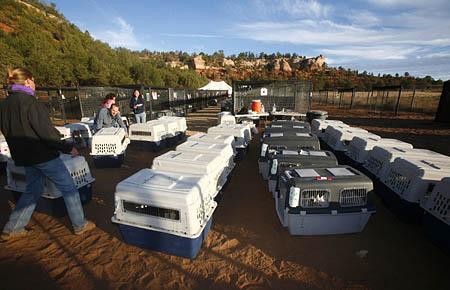
For Michael Mountain, Best Friends’ president, the arrival of his Lebanese guests was joyous after weeks of complications and hard work. “It’s been a hectic few days but they’ve done very well,” said Mountain, adding that many pets had broken bones and all still react to loud noises or “anything that sounds like war.”
Best Friends funded the animal airlift, primarily through donations made to its website. The operation is expected to cost more than $250,000 ($200,000 of which has already been contributed). We at Pop Art Pet are long-time supporters of Best Friends and are so happy to once again see our donation dollars at work, rescuing animals in need around the world.
For information on how you can donate or better yet, sponsor or adopt one of these furry refugees, please visit Best Friends’ website today!
Is your dog a “latch key pupâ€? That’s a dog that sits home alone, waiting to hear the key turn in the door when you return from a long day at the office? For many dogs, especially younger and/or bigger dogs, this lack of stimulation and socialization often results in bad behavior like shoe-chewing, trash-digging, and worse.
Every city in America, and I suspect most small towns as well, at this point offer a variety of qualified facilities where your furry kid can spend the day exercising and socializing, getting the care and attention he or she deserves. Many even offer you the ability to watch them having a great time on a webcam while you are slaving away at your desk earning the money to pay for it! Finding the right care center for your dog is just as important as researching a playschool for a child. Your best bet is to get personal recommendations from people who take their dog to daycare, but if that isn’t an option you should make a list of all the places in your area and visit each one to compare and ask questions.
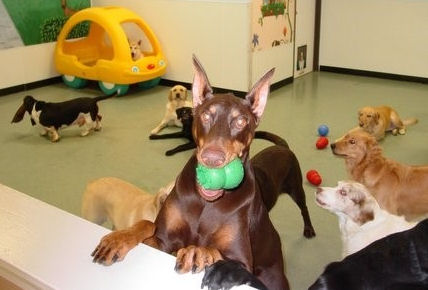
Some important things you should learn before deciding on a daycare:
Operating hours – Ideally, the daycare center’s business hours should extend beyond the start and the end of your normal workday so you have time to drop your dog off and fetch them without rushing (Be sure and ask if they charge a late fee when you arrive after the standard closing time). Some centers offer a canine taxi service which can be a great time-saver if you have a hectic schedule.
When you tour the facility (and you must tour the facility), observe how the staff reacts to all the dogs, and more importantly how the dogs react to them.
Ask if and how the dogs are segregated. Your pal may prefer a center where larger breeds are separated from the smaller ones. And the better facilities assess your dog’s social skills as well as his size when determining his appropriate play group.
Make a note of how accessible water is for the dogs and ask how often the water is refreshed. Most establishments require owners to pack their own doggie lunches to avoid any special dietary issues.
Most daycares don’t offer walks outside the facility because the dogs get enough exercise running around with each other all day. But it is important that there are spacious indoor and outdoor play areas as well as a comfy, well ventilated areas for lounging.
Of course your dog will need to have all his or her immunizations up-to-date, but be sure and inquire about all their health requirements.
Naturally you’ll need to find out what it costs and canine enrichment doesn’t come cheap! As with everything else in America, when it comes to doggie daycare, you get what you pay for. But be sure to ask about any reduced rates offered if you pay monthly or if you have multiple dogs.
What’s the latest trend in Doggie Daycare? If you and your dog live in an “up-scale” community, your local doggie daycare facilities may now be calling themselves “canine enrichment centers.†They are more like doggie day spas, offering a variety of other services, such as grooming, and massage therapy. Some even have a pool for supervised swimming, nature trails, and a rec room with giant TV screens playing dog-orientated programs. They offer activities for pet parents as well, like “Doga” (the doggie version of yoga) and paw painting classes.
We actually have some great clients, turned affiliates, who own and operate some really fantastic doggie daycare facilities. Downtown Hound, home of handsome Pop Art Pet subject, Cruiser, is the perfect place for dogs in Boise, Idaho to spend their days maxin’ and relaxin’!

Judging by the pictures and the webcam on their website, the party never stops – except when it’s naptime of course. If you’re in the Boise area, check them out and tell Tracy we said hello!
Downtown Dog Lounge was voted the Best Doggie Daycare in Seattle this year! Gunner & Lily, who we have also had the pleasure of immortalizing in Pop Art Pet portraits, help their mom, Elise, run two metro locations. 
Downtown Dog Lounge, DTDL for short, offers their clients in-house grooming services as well as a “Pooch Nanny” for pups with special needs like post-surgical pooches, seizure prone dogs, and puppies & senior dogs who might need a little help getting around. If you are looking for doggie daycare in Seattle, please give them a call!
There are benefits to doggie daycare for you as well, like you won’t have to worry about what your friend is up to at home unsupervised. Then, at the end of a long day at work when all you want to do is relax on the couch, so will your dog. He won’t be begging to go on a long walk, or keep bringing you that tennis ball. He’ll be well-exercised and tired, so you won’t have to feel guilty for not indulging him. But don’t worry, the two of you can still go nuts together on the weekends!
Every day more people are taking their pets along when they travel, but traveling can be highly stressful, both for you and the four-legged members of your family. But with thoughtful preparation, you can ensure a safe and comfortable trip for everyone.
The ASPCA urges pet owners to think twice about flying their pets on commercial airlines, especially if they plan on checking them in as cargo.
 “Unless your animal is small enough to fit under your seat and you can bring him or her in the cabin, the ASPCA recommends pet owners to not fly their animal,” says Lisa Weisberg, ASPCA Senior Vice President of Government Affairs and Public Policy. If pet owners have already committed to transporting their pets on commercial airlines, the ASPCA is offering the following top ten tips for safe air travel with your pet:
1. Make an appointment with your pet’s veterinarian for a check-up, and make sure all vaccinations are up-to-date. Obtain a health certificate from your veterinarian dated within 10 days of departure.
2. Make sure your pet is wearing a collar and an identification tag. Breakaway collars are best for cats. The collar should also include destination information in case your pet escapes.
3. Book a direct flight whenever possible. This will decrease the chances that your pet is left on the tarmac during extreme weather conditions or mishandled by baggage personnel.
4. Purchase a USDA-approved shipping crate that is large enough for your pet to stand, sit and turn around in comfortably. Shipping crates can be purchased from many pet supply stores and airlines.
5. Write the words “Live Animal” in letters at least one inch tall on top of and at least one side of the crate. Use arrows to prominently indicate the upright position of the crate. On the top of the crate, write the name, address and telephone number of your pet’s destination point, and whether you will be accompanying him or if someone else is picking him up. Make sure that the door is securely closed, but not locked, so that airline personnel can open it in case of an emergency. Line the crate bottom with some type of bedding—shredded paper or towels— to absorb accidents.
6. Affix a current photograph of your pet to the top of the crate for identification purposes. Should your pet escape from the carrier, this could be a lifesaver. You should also carry a photograph of your pet.
7. The night before you leave, make sure you’ve frozen a small dish or tray of water for your pet. This way, it can’t spill during loading, and will melt by the time he’s thirsty. Tape a small pouch, preferably cloth, of dried food outside the crate. Airline personnel will be able to feed your pet in case he gets hungry on long-distance flights or a layover.
8. Tranquilizing your pet is generally not recommended, as it could hamper his breathing. Check with your veterinarian first.
9. Tell every airline employee you encounter, on the ground and in the air, that you are traveling with a pet in the cargo hold. This way, they’ll be ready if any additional considerations or attention is needed.
10. If the plane is delayed, or if you have any concerns about the welfare of your pet, insist that airline personnel check the animal whenever feasible. In certain situations, removing the animal from the cargo hold and deplaneing may be warranted.
Source: ASPCA.org
In the cities of Appleton and Madison, Wisconsin, fire trucks and ambulances have been equipped with masks intended for use on dogs, cats and other small animals.
Alderman Richard Thompson initiated the program after he saw a newspaper photograph of a firefighter in Superior giving mouth-to-mouth resuscitation to a cat rescued from a house fire.
“A pet is family to most people,”he said.”I know I wouldn’t want to lose Maggie, my collie, or Lucy, my Tabby cat, to a fire, carbon monoxide poisoning or Lord knows what else.”
The money to pay for each $49 mask came from donations by local animal lovers.
“It was something to see,”Thompson said.”There was no organized solicitation effort. People and community groups just read or heard about the program and stepped up to the plate.”
The masks, which come in three sizes, will be distributed to each of six fire stations and to the Appleton Police Department K-9 unit, he said The Madison Fire Department carries similar masks on its seven ambulances, said Lori Wirth, the department’s community education officer.
The Madison department also bought its masks with money raised from unsolicited donations, she said. In fact, the department raised so much money it was able to buy mask kits for several neighboring communities.
Wirth said the department’s firefighters haven’t had to use the masks yet but they’re trained and willing.
“What we’ve done so far is use the masks as a way to remind people to get out of their residence in the event of a fire and don’t go searching for pets,”she said.”Firefighters will care for any pets we find in the event they suffer from smoke inhalation.”
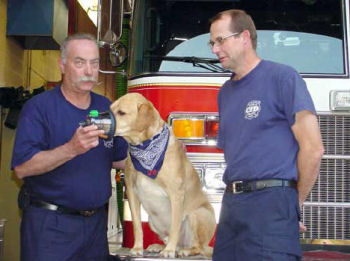 Oxygen masks made for pets are actually now being used by fire departments all over the country. The trend started in Florida in 2004, when the death of a dog from smoke inhalation triggered a local campaign to equip fire departments, said Jeff Baker, vice president and general manager of Smiths Medical Veterinary Division, a Waukesha, WI, company that makes the masks, traditionally used for anesthesia. They have sold more of the masks since then, than in the previous 15 years, most going to fire departments including Chicago and New York City.
Human oxygen masks are often foiled by fur and long noses, leading firefighters to try makeshift methods including, in moments of true dedication, mouth-to-snout resuscitation. But the cup-shaped pet masks have a rubber ring that creates a seal, allowing rescuers to pump pure oxygen into the noses of dogs and cats. Each set has three masks – small, medium and large – meant to fit all sizes of pets. Without the masks, reviving animals was hit-or-miss at best, firefighters say, and losing a pet adds more trauma to a family already dealing with the fallout from fire damage.
 Firefighters are of course still trained to rescue people first, but they are willing to take further risks to bring out an animal. They realize, like we do, that pets are an important part of people’s families.
One year ago, as we witnessed the devastation to New Orleans during Hurricane Katrina, and to the pets left behind in the days and weeks that followed, we were mortified. We have periodically provided updates of ongoing rescue efforts and legal issues. So how are things one year later?..
Now that a year has passed, many of the animals rescued after 80 percent of New Orleans was flooded, have found their way back to their owners or to new homes across the country. Unfortunately however, the city’s only animal shelter – which operates out of an old coffee warehouse without air conditioning or drainage – is still full of hundreds of pets awaiting adoption. 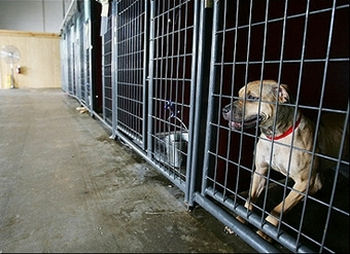
Some are strays found wandering through the rubble of abandoned homes. Others were actually given up by owners after the storm, because they were unable to care for them because of the stress of living in tiny trailers while they rebuild their homes, among other reasons.
Thousands of animals died in the floods or in the aftermath when evacuees were barred from taking their pets or returning to find them. Then animal rescue workers found their efforts delayed when they were barred from entering the city until a week after the storm hit. They paddled through floodwaters and broke into houses to rescue the pets of people who thought they would only be gone two or three days. Animals barred from evacuation buses were picked up on the streets as they rooted through garbage in search of food.
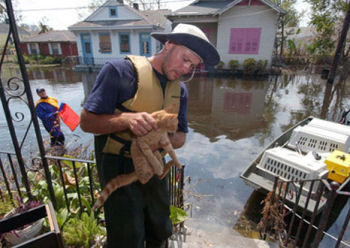
About 16,000 pets were rescued and shipped to shelters across the country. Only 15 to 20 percent were eventually reunited with their owners. A lack of proper identification and technology to handle such a huge project slowed the reunion process, as did the time it took evacuees to find suitable housing. As you know if you have read our previous posts, at least a couple dozen families have since sued aid agencies because the new owners of their pets would not return them, creating an emotional and legal dilemma for everyone involved.
Perhaps the only positive thing to come out of Katrina, seven states and the federal government have since passed laws ensuring that evacuation plans include pets, and some of those laws have even provided funds for pet-friendly shelters.
Animal shelters across the country have contacted the Louisiana SPCA to get a copy of its evacuation plan, which managed to safely evacuate 263 animals ahead of the storm. That foresight saved their lives: when the shelter’s staff was finally allowed to return they found the shelter swamped with eight feet of water. The SPCA is currently raising funds for a new 17 million dollar facility in New Orleans, slated to open in January.
Right here in Denver, at a wonderful little no-kill shelter called MaxFund a very special 7-week old kitten is making a name for herself. Lovely little Lola was born with back legs that are too long for her little body and can’t easily walk normally.  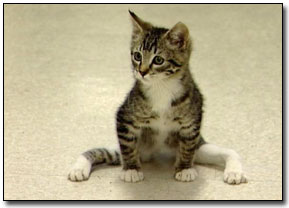 So she figured that the easiest way to get around was to put her head to the ground, her back feet into the air and walk on her front paws. We saw her on the local news last night and again this morning and we were amazed!
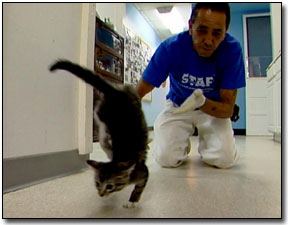
In addition to the deformity in her back legs, shelter workers believe Lola may have partial paralysis. But she’s not in pain, she loves to play, and like all determined creatures she’s found away to get around in the best way she can. Go Lola Go!
In other unusual animal activity..
Attention Doberman owners: are you tired of people looking at your “dangerous killer” dog in fear? Well, why not disguise your doberman as a poodle with this costume?
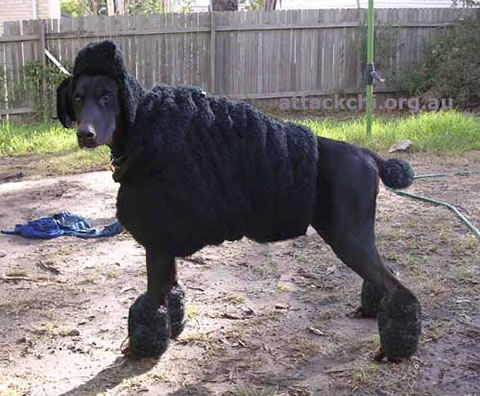
The company that makes the costume, attackchi.com.au,  has some other clever cover-ups in the works as well. 
Â
Soon you’ll be able to disguise your German Shepherd as a Golden Retriever and your Mastiff as an Old English Sheepdog!
If you like shopping, and you love your pet, well then you’re our kind of people! And if you’re like us on about every other credit card statement there is a charge for the vet’s office (it’s not that Kylie’s unhealthy, we’re just paranoid). Well we just found out about the ideal credit card for pet people like us and wanted to pass along the info…
The Pet Rewards Visa is offered by Bank of America, and it lets you earn points toward vet bills, pet food, and even animal rescue donations!

I promise, we are in no way affiliated with and get no kick backs from visa or Bank of America. It’s just nice to see corporate america coming around, and rewarding us for valuing our pets, and for supporting animal charities!
Plus it makes shopping more fun!
Did you know that “National Homeless Animals Day” is this Saturday, August 19, 2006?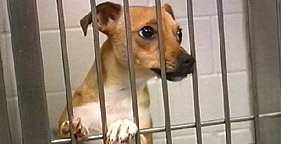
The International Society for Animal Rights (ISAR) began “National Homeless Animals Day” to publicize the magnitude of the problem of dog and cat overpopulation, which condemns millions of animals to death every year in our country’s animal shelters. From modest beginnings in 1992, National Homeless Animals Day has grown enormously. Animal Rights/Welfare organizations, and individuals from around the world have taken part in the event to promote adoption and spay/neuter programs.
National Homeless Animals’ Day is always observed as the 3rd Saturday in August, this year being August 19, 2006. Organizations around the globe participate by finding new ways each year to mark the day: from open house at their shelter, mobile adoptions, spay/neuter or vaccination clinics, pet walks and days at the park, to full fledged candlelight vigils. It is up to each participating group to decide what would work best in their community and most effectively call attention to the issues. Often, as part of National Homeless Animals Day, governors and mayors across the country sign proclamations written by ISAR. These declarations urge people to act responsibly by having their companion animals spayed or neutered to help curb pet overpopulation, ultimately putting an end to the killing of healthy but homeless animals.
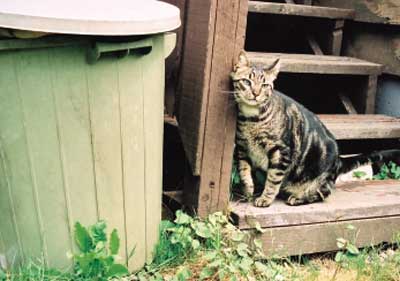 ISAR’s goal this year is for all 50 states to be represented and for their international presence to grow as well. Individuals or organizations wishing to take part in National Homeless Animals Day can contact ISAR for a free vigil packet which contains materials on how activists can organize their own vigils, as well as helpful hints for holding a successful vigil.
We encourage you to check the events calendar in your community to find out if and how National Homeless Animals Day will be recognized in your area; or be proactive!
To request a packet, write or call:
International Society for Animal Rights
965 Griffin Pond Road
Clarks Summit, PA 18411
800.543.ISAR (4727)
America’s 65 million dogs have more ways to play than ever. The growing number of Dog Parks in the U.S. dedicated to off-leash play are estimated at more than 700, the best ones include water fountains and even swimming pools! According to experts, dogs that are highly socialized and exercised are healthier and happier. Studies have shown that dogs that exercise and are regularly allowed to run freely are not as aggressive towards people as dogs that are under-exercised. Allowing dogs to have an off-leash area socializes dogs by bringing them in contact with other dogs causing them to be less aggressive in each future encounter with dogs. In general, time spent at the dog park improves the mental and physical state of dogs.

Dog parks are good for people too. They not only allow you to have the pleasure of watching your dog(s) at play, but you too can actually derive the same socialization benefits as your dog. Scientific studies have shown that people somehow find it easier to talk to each other with dogs as the initial focus. You could probably also find “scientific studies” that show that fresh air and exercise is good for people too! So before your furry kids head back to school and the chill of winter blows in, spend some quality time with your dog and other dog lovers at a dog park near you!Here are some basic do’s & don’ts for a trip to the dog park:
Obey posted park rules
Always keep your eye on your dog- mischief can happen quickly
Never bring more dogs than you can watch- 3 is about the limit
Never leave your dog unattended
Always clean up after your dog! Poop bags are typically supplied, but it is still always advisable to byob (bags).
Remove any halters, metal choke chains or link collars. In the rough and tumble play a tooth or nail could get caught in this type of collar, resulting in a scared dog, lost tooth or broken nail and possibly a panic fight.
Make sure that your dog is current on all shots, including Bordetella for kennel cough.
Don’t bring dogs younger than 4 months to an off-leash park. They won’t have all of the necessary inoculations to allow them to play safely with other animals.
Do not bring a female dog in heat!
It is preferable for multiple reasons that your dog is spayed/neutered.
If your dog becomes unruly or plays rough, leash him and leave the park.
If you bring children, supervise them closely.
Help educate other, less experienced park users.
This year’s Top Ten U.S. dog parks, based on criteria ranging from safety considerations to owner educational resources, including urban and suburban settings coast to coast are:
1. Fort Woof Dog Park — Fort Worth, Texas
2. Paw Park of Historic Sanford — Sanford, Fla. (Orlando area)
3. Fort De Soto Paw Playground — Fort De Soto, Fla. (St. Petersburg area)
4. City of Rome Bark Park — Rome, N.Y.
5. Carl’s Dog Run — New York, N.Y.
6. Ohlone Dog Park — Berkeley, Calif. (San Francisco area)
7. Kenton Paw Park — Covington, Ky. (Cincinnati area)
8. Fleet Peeples Park — Winter Park, Fla. (Orlando area)
9. El Paso County Dog Park — Colorado Springs, Colo.
10. Stanley’s Spot — Morgantown, W.V.
We found some interesting dating advice for the single girl, and thought we should pass it along. It explains how you can judge your date by his dog, such as the “Dober-man” as compared to the “Lab-man.” It was written by Wendy Diamond, founder and editorial director of Animal Fair (fairness to animals) magazine. She has even written a book called “What a Lucky Dog! How to Understand Men Through Their Dogs.” 
It’s quite an interesting concept, let us know what you think:
There are more than 68 million dogs in the United States. I can guarantee you that at the end of more than half of those dogs’ leashes you will find men.
A dog is a man’s loyal best friend. And, since men naturally identify with dogs, it’s possible to identify common links and shared personality traits between men and their dogs. In fact, I foresee a new wave in pop culture emerging. A man won’t be vaguely called a “dog” any more — he’ll be humorously defined and nicknamed by the breed or mutt he owns! He’ll be a “Dober-man,” a “Lab-man,” “Mr. Beagle,” “Mutt man” and so on.
For example, consider a Chihuahua man. He can be very demanding when he doesn’t get his own way. He loves to be the center of attention, too. Zealous and impassioned actor Mickey Rourke is a Chihuahua man. The Irish Setter-man is very sociable and good-natured; perhaps that’s why he can be often found at the pub with his buddies. On your first date, suggest an Irish pub that serves authentic dishes such as shepherd’s pie, fish and chips and beef stew. If you get serious with Mr. Irish Setter man, you can expect him to be loyal, affectionate and a family man.
Will Smith, a Rottweiler man
Mr. Rottweiler can’t help but become overly protective when he senses his loved ones are in danger. Will Smith, a Rottweiler man, is known in Hollywood as very protective of his wife, Jada, and their children. A Mutt man changes his moods at the drop of a hat, as he possesses the numerous personality traits of his various ancestors! Famous, multi-talented Mutt men actors include sexy Brad Pitt, soulful Kevin Spacey, mysterious David Duchovny and animated Alan Cumming.
Equally important to predicting a man’s personality traits based on the breed of dog he owns are some applicable training techniques. In general, housebreaking can be a problem for both men and dogs, as they must mark their territory. Dogs leave scent marks; men leave wet towels, worn socks or clothes on the back of a chair or the end of a bed. Let’s face it, both love their treats and it’s important to know when to reward and when to hold back, otherwise you’ll have one spoiled pup on your hands!
For some specific behaviors, consider Mr. West Highland Terrier for example. He is affectionate albeit demanding. He has an insatiable appetite for being in the know and in the middle of what’s happening. He’s highly sociable and doesn’t like to make waves. Diplomacy is his middle name and, although he is very loyal, don’t expect him to fight your battles for you. Given all of his outdoor activities and social calendar, you’ll have to teach him that your private time can be as exciting and fulfilling as the next grand opening. Fads fade but true love lasts.
Channel his high energy
Mr. Golden Retriever is not above going through your closets and personal belongings when you’re not aware. He’ll feel entitled to claim your possessions as mutual territory. You can help him channel his high energy by giving him projects around the house or yard, such as; building shelves, painting the apartment and landscaping the garden.
Finally, if you have a faithful dog in your household, count on it to help sniff out whether your budding relationship might just be puppy love or the real deal.
When you first start dating, your dog will give you a sure indicator about how it feels about your new love interest. At first meeting, your dog’s tail will wag with approval if it connects positively. If your canine love consultant barks and growls every time sweetie enters the room – beware of cupid! His arrow might have missed the mark! Some breeds are more protective and take longer to warm up to new people entering their clan.
Happily forever after?
Canines, like men and women, can become jealous when they feel they might have to share treats and attention. It’s important to incorporate the person you’re dating in your dog’s regular activities to prevent competition and promote compatibility. Your dog will welcome your love interest at the front door with excitement when it has accepted your love match! But, after several months of dating if your dog doesn’t warm up, you might want to check out the personality traits of your breed with your potential mate to find out if happily forever after is in your future.
There is an endless variety and ample opportunities for discussing both men and dogs with girlfriends over Sunday brunch, with co-workers during lunch, your mother and sisters over dinner. Dog stories, too, can lead to many conversations with your special man while you’re walking his dog to the local dog run. Have fun!

