Archive for the ‘News & Tips’ Category
It was our Christmas wish this year that we wouldn’t have to turn away any Holiday orders, so even though our deadline has now passed and we are extremely busy trying to keep up with the orders we’ve already received, we encourage you to contact us if you are interested in placing an order for a Christmas gift.
You can send us the photo(s) you would like us to work with and let us know what size & style you had in mind, we’ll try to evaluate it quickly and let you know if we can take your order. Of course you may need to include Express shipping charges in order for your completed portrait to be delivered on time.
Or we may be able to design proofs for you in time for Christmas. Then the recipient can go online and see the artwork and even choose which proof we print for their portrait, which they will receive shortly after the holidays.
So just send us a message , it may not be too late!
Don’t have pictures for us to work with? You can order a Gift Certificate through December 23rd and we’ll send it via email for you to print, and currently you can save 30%!
Also, if you’re looking for something slightly less complicated for the pet lover on your shopping list, such as t-shirts, mouse pads, tote bags, or something of that nature, be sure and visit our online Gift Shops. We offer our original artwork, on fun & functional products, featuring so many popular breeds you’re sure to find their favorite!
Typically our holiday rush of orders starts in the middle of October and we get so busy that we have to set our deadline in the middle or third week of November, and sadly sometimes even turn people away after Thanksgiving. Well, this year we didn’t want to have to do that so we increased our artistic staff in anticipation and set our first holiday ordering deadline late, December 2nd. Then, while we have had some early-bird shoppers popping up since the middle of June, when the first week of November rolled around we were starting to wonder where our holiday shoppers were?? We were certainly experiencing an increase in our orders for dog portraits and especially cat portraits, but it was not quite what we were used to in the middle of autumn.
Other artists friends were experiencing the same trend so we were all speculating.. maybe it’s the economy, maybe it’s the weather – it’s been way too warm most places for people to be thinking christmas..
Well whatever it was, it has passed! Since the second week of November there has been an avalanche of custom pet portrait orders to fill in time for the holidays! So here we are, the week of Thanksgiving, considering shortening those deadlines…
So if you’ve been on the fence, or still procrastinating, do not delay! This may be your last week to order a Pop Art Pet portrait in time for christmas! We’ll have to see how things go this week, particularly this Friday, but we may have to move our deadline up to this weekend or the middle of next week, so stay tuned and we’ll keep you posted…
You can check our current deadline on our Holiday Ordering Info page, or go directly to our Order Page to place your holiday order now!
And thanks to all of you for shopping early – or at least on time!
If you are traveling this holiday season and unable to take your pet with you, and you are searching for a sitter or boarding facility be sure and do your homework. Here are some questions to ask potential caretakers to make sure you are finding the right situation to fit your needs.
How long have you been doing this?
Many students try pet sitting to make extra money. While they might love dogs, or cats, there is no guarantee of the type of care your pet will receive.
Can I bring my pet in for a trial run first?
Many boarding facilities offer trial runs for free, some really good ones even require that your pet come in for an assessment of his reaction to the environment. So if the one you are contacting does not, contact someone else.
What should/can I bring with my pet?
Find out what personal items are required or recommended to ensure your pet is as comfortable as possible. Bringing her own blanket or bed will be comforting. However, if your dog is a chewer you may not want to risk having the item destroyed or worse, having him choke if left alone for long periods of time. Here’s a suggestion if you can bring such items.. include an article of clothing that you slept in the night before the drop-off. Your scent will hopefully reassure your pet that you are coming back for him.
How often do you clean? (for boarding facilities)
What would you do in the event of an emergency?
Can you provide references?
Then be sure you actually check them.
Are you insured and bonded?
Ask how each of these benefits or protects you as a client.
Will you administer medication? (if necessary)
Do you require that all pets in your care have their shots?
When you go on walks or excursions, do you let the dogs off leash?
Will you take my pet to the vet if she gets sick?
Are the animals supervised / is someone on the premises at all times?
Hopefully this is helpful information, though actually we highly recommend you take your pet with you this holiday season so you don’t have to worry about all this, and to make the family celebrations complete!
Progressive Auto Insurance is now officially the first major car insurance company to provide Pet Injury Coverage with your car insurance policy at no additional cost. So if your dog or cat is ever hurt in a car accident, they will cover the vet bills. Here is the coverage description from their website:
Pet Injury Coverage
What is it? – Pets are part of your family, which is why Pet Injury coverage – available exclusively from Progressive – is a feature of your Collision coverage with Progressive. If your dog or cat is injured in an accident for which you use Collision coverage, we’ll pay up to $500 to help with the cost of veterinary bills and medicine. Or, in the unfortunate event that your pet dies in the accident, we’ll give you up to $500 to find a new pet. No other auto insurance company covers your pets like we do.
When can I use it? – If you can use Collision coverage, you can use Pet Injury coverage for pets you or your relatives have.

Pet Injury Protection is built in to your Collision coverage – there’s no added cost if you choose to use it or not use it. It’s just one more way we let you know we care about you and your family, human or otherwise.We are impressed! You can learn more about the policy on Progressive’s Website and even get a quote.
Happy Halloween, pet parents! As October 31 approaches, The ASPCA would like to call your attention to these common-sense cautions that’ll help keep your pets safe and stress-free this time of year.
1. No tricks, no treats: That bowlful of candy is for trick-or-treaters, not for Scruffy and Fluffy. Chocolate in all forms can be very dangerous for dogs and cats, and tin foil and cellophane candy wrappers can be hazardous if swallowed. If you suspect your pet has ingested a potentially dangerous substance, please call your veterinarian or the ASPCA Animal Poison Control Center at (888) 426-4435.
2. Popular Halloween plants such as pumpkins and decorative corn are considered to be relatively nontoxic, yet they can produce gastrointestinal upset should pets ingest them. Intestinal blockage could even occur if large pieces are ingested.
3. Keep wires and cords from electric lights and other decorations out of reach of your pets. If chewed, your pet could experience damage to his mouth from shards of glass or plastic, or receive a possibly life-threatening electrical shock.
4. A carved pumpkin certainly is festive, but do exercise extreme caution if you choose to add a candle. Pets can easily knock a lit pumpkin over and cause a fire. Curious kittens especially run the risk of getting burned or singed by candle flames.
5. Dress-up can be a big mess-up for some pets. Please don’t put your dog or cat in a costume UNLESS you know he or she loves it (yup, a few pets are real hams!). For pets who prefer their “birthday suits,†however, wearing a costume can cause undue stress.
6. If you do dress up your pet, make sure the costume isn’t annoying or unsafe. It should not constrict the animal’s movement or hearing, or impede his ability to breathe or bark. Keep a look out for small, dangling, or easily chewed-off pieces on the costume that your pet could choke on.
7. Take a closer look at your pet’s costume and make sure it does not obstruct her vision in any way. Even the sweetest animals can get snappy when they can’t see.
8. All but the most social dogs and cats should be kept in a separate room during peak trick-or-treat visiting hours. Too many strangers can be scary and stressful for pets.
9. When opening the door for trick-or-treaters, take care that your cat or dog doesn’t dart outside.
10. IDs, please! Always make sure your dog or cat has proper identification. If for any reason your pet escapes and become lost, a collar and tags and/or a microchip increase the chances that he or she will be returned to you.
Inside Edition reports, it’s not just people fleeing from the path of the California wildfires…its animals too. A terrified herd 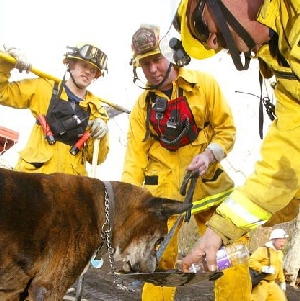 of horses took a wrong turn stampeding from a fire just a few yards away, and had to turn back. The horses were rescued by ranch owners and firefighters.
Many other animals joined the exodus from the firestorm any way they could. One horse was seen being led behind a luxury convertible.
Some Californians were ordered to evacuate, leaving their animals behind.
A pregnant goat was rescued by animal control officers, as were some llamas found by a highway, traumatized by the fires.
Now, the famous Del Mar race track has an animals’ safe haven. The race track has become a makeshift Noah’s Ark for dogs, llamas, goats and ponies. Even some owners are staying. One new resident says, “Knowing that there was a place here at Del Mar that was safe from fire was really a blessing.”
About 2,000 horses from all over San Diego County are being sheltered at the track. Sadly though, while these animals are safe, it’s feared thousands more may still be in danger as the raging fires continue.
—————–
Our friends at Pasado’s Safe Haven in Washington were once again fast to react and start saving dogs and cats and other animals left behind. And the great news is they have now been offered a brand new facility between LA and San Diego complete with staff AND veterinarians! They have 1700 stalls and 2500 acres ready to go, and they will also have three 25 acre farms ready to go if needed.
They are gathering names and e-mail addresses of those individuals who can join them in California to help out. Volunteers will need to pay for their own airfare and provide for their own accommodations. If you can help, please e-mail them with your name, dates of availability and cell phone number. And be sure and note if you have any additional talents such as veterinary, EMT, police, FEMA certified, etc. or have support services available such as a livestock trailer. You will find a link to email them on their website, along with updates of their ongoing efforts in California. Of course financial support is always very needed and very appreciated, so we encourage you to give anything you can. Donations can be made online on their website, just click here.
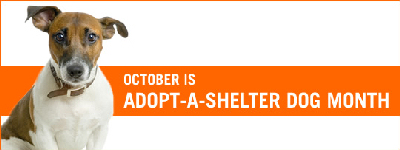 Did you know that the ASPCA encourages dog lovers to celebrate October as national “Adopt-a-Shelter Dog Month”? While the organization strives to raise awareness of the plight of shelter animals year-round, in October they place special emphasis on urging potential pet parents to consider choosing from the millions of adoptable, endangered, companion animals in shelters across the country.
On their website they are sponsoring a photo contest, a special store to raise funds, and you’ll love to read the Success Story of the Week, all to raise awareness.
Something you should be aware of, according to Ed Sayres, President & CEO of the ASPCA, approximately 5 out of 10 of the animals in shelters in the US are euthanized simply because there is no one to adopt them.
So adopt a dog and save a life!
There are so many stories  and mysteries surrounding the fascinating feline, it’s hard to know what’s fact and what’s pure urban kitty legend. But I recently came across a survey of America’s top veterinarians and animal behavior consultants in which they set the ricord straight on six of the most common cat myths.
1. Cats can’t swim and hate getting wet. – Not entirely true. The Bengal and the Turkish Van are two breeds of cat that are eager to join their humans in showers or bathtubs. They love to play in the water! Some will even do dog-like tricks in the water, jumping in to fetch, etc. Their guardians have to be warned to keep bathroom doors shut and toilet lids down to avoid incidents.
2. Poinsettias are deadly for cats. – This has been greatly exaggerated according to expert vets. The leaves of poinsettias do contain a thick white sap that may cause mild signs of stomach upset if your cat chews on them, but they are not lethal. Lilies on the other paw are the most lethal plants for cats – several kinds of Lilies can cause severe poisoning in a cat even if they ingest a very small amount. Please take them to a vet immediately if your cat eats a Lily, to avoid kidney failure.
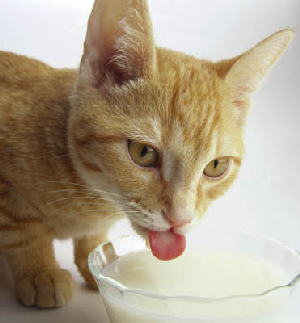 3. Milk is good for cats. – False. Most cats in fact are lactose intolerant, so even if they like it it will cause stomach upset, diarrhea and vomiting. In general, vets recommend not giving your cat any kind of people food.
4. Cats purrrrr only when they’re content. – While cats may purr when they are relaxed and content, they also use it for other communication purposes. A mother cat will purr to orient her newborn, blind kittens and draw them towards her for nursing. They may also purr if they are sick or even dying as a means of self-calming.
5. Cats can’t get heartworms. – False. Just this year an educational campaign conducted by the American Heartworm Society and the American Association of Feline Practitioners, served to educate Veterinarians about this myth. Heartworms in cats is frequently misdiagnosed because it affects them very differently than dogs, and 28% of the cats that contract heartworms are never outdoors. However, just like with dogs, this disease is completely preventable so please put your cats on a heartworm preventative.
6. Cats can be treated like small dogs. – False. Especially when it comes to medications. Many topical insecticides and parasite preventatives are labeled for use on dogs only because they can be harmful to cats. Also, over-the-counter pain relievers such as aspirin, acetaminophen, and ibuprofen are particularly dangerous for cats. As a general rule, do not give your cat any medication, inside or out, that your vet did not prescribe or recommend.
This is all very interesting and informative, but personally I think they forgot something very important from this list.. Cats always land on their feet. Is that true or just an old wives tale? If anyone has any facts about this legend, please let us know!
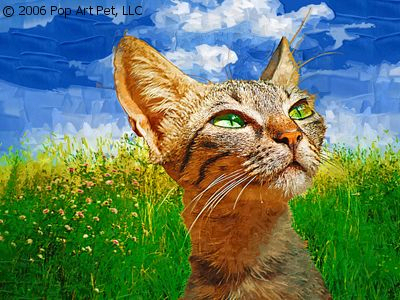
What is not a mystery where cats are concerned, is where to have one-of-a-kind custom portraits created from your cat’s photos.. Whether your cat is comical, like our Lichtenstein-like Comic Style art; classical, like our Traditional style art; or whimsical like our Warhol-esque Pop Art portraits we can make your favorite feline into a masterpiece. Check out our cat-lovers gallery for some examples of our completed cat portraits!
Dogs are born explorers. Migration comes naturally to them, just as it does to many other animals, humans included. But the process of moving is very different for people — and can often leave your dog feeling confused and anxious. Here are a few tips that may make the transition easier for you both.
1. As always, pay attention to your energy. A move can be highly stressful, and tempers are likely to run high. Your dog will already be feeling unsure once the things that are familiar to him around the house begin disappearing, so it’s important to give him stable energy to feed off of.
2. Allow your dog to explore the new house before the move. You wouldn’t feel entirely comfortable packing up and moving if you had no idea where you’d be moving to, would you? Trust me, neither would your dog! If you live close to the new house, consider walking him between the old house and the new, letting him get used to the sights and smells of the new neighborhood. This will help him feel more at ease when moving day arrives.
3. Take a nice, long walk before any kind of travel. This is important before any trip. The object is to make sure your dog is in a relaxed resting mode before putting him in a car or plane. If it’s a particularly long trip, make it a longer walk, or add an exercise backpack to maximize the workout.
4. Don’t give him the run of the new house right away. The last thing you want is to leave your dog alone to take command of the house while you unpack. It’s important to establish that you own the new space. Consider introducing him to one room and making him comfortable there while you put the finishing touches on the move. Then introduce him to the rest of the house, room by room, communicating that you are the leader in this new “den,” just like you were the leader in the old one.
These are tips from everybody’s favorite dog whisperer, Cesar Millan.
A new study here in Colorado at the CSU College of Veterinary Medicine suggests that dogs and cats may get into more medical mischief during certain phases of the lunar cycle. The study, authored by Dr. Raegan Wells, a veterinarian, and her colleagues at Colorado State University’s College of Veterinary Medicine and Biomedical Sciences, shows a possible link between an increase in emergency room visits for dogs and cats during days when the moon is at or near its fullest.
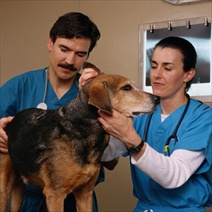 The data, compiled from 10 years of nearly 12,000 case histories of dogs and cats treated at the university’s James L. Voss Veterinary Teaching Hospital, indicates that the risk of emergencies on fuller moon days was 23 percent greater in cats and 28 percent greater in dogs when compared with other days. The types of emergencies ranged from cardiac arrest to epileptic seizures and trauma, and the increase was most pronounced during the moon’s three fullest stages – waxing gibbous, full and waning gibbous.
Dr. Wells said this is the first time the lunar cycle’s relationship to emergency veterinary medicine has been studied. The study, titled “Canine and feline emergency room visits and the lunar cycle: 11,940 cases (1992-2002),” appears in the July 15 issue of the Journal of the American Veterinary Medical Association.
“If you talk to any person, from kennel help, nurse, front-desk person to doctor, you frequently hear the comment on a busy night, ‘Gee, is it a full moon?’ “said Dr. Wells, who is an emergency and critical care medicine resident in the Department of Clinical Sciences. “There is the belief that things are busier on full-moon nights.”
Just what is behind the correlation, however, isn’t clear.
“While the results of our retrospective study indicate that there is an increased likelihood of emergency room visits on the days surrounding a full moon, it is difficult to interpret the clinical significance of these findings,” Dr. Wells wrote in the article. “Many studies have investigated the effect of the moon on human nature, behavior and various medical problems, with evidence both supporting and refuting the effect.”
Source: CSU E-Insight

