Archive for the ‘News & Tips’ Category
We are obviously animal friendly around here but did you know we try to be earth friendly too? We have started a new single stream recycling program for our home and office but our biggest challenge is being environmentally conscious when shipping our portraits. Obviously they are fragile and need to be handled and packaged with care, and we need to use very specifically sized boxes so we have to purchase them new. And most other packing materials are not recycle-able and not even bio-degradable. So for these items we do the next best thing, a little real world recycling… We obtain our packing materials through craigslist and freecycle.com.
 Fortunately more and more people are becoming aware of craigslist and freecycle and are using them to keep things out of landfills. Especially after moving, lots of people will post that they have boxes and other packing materials for free to anybody who wants them. We have acquired bags & bags of bubble wrap, packing peanuts, and paper to fill our boxes and securely ship our one of a kind portraits to our clients. So if you order a custom pet portrait of your own you may find the package filled with some paper and some plastic pillows, or some other combination of nice cushy materials keeping your masterpiece protected.
Whenever possible we will REuse a box too, so if we happen to get a conveniently sized shipment from amazon, your portrait may arrive with a familiar smiley face on the box! And it definitely will arrive with a sticker reminding you to please Reduce, Reuse, and Recycle what we’ve sent to you.
Just doing our little part for the planet and hoping you will too! So remember next time you need to pack or ship something check your local craigslist or sign up with freecycle.com!
Once I read a magazine article about pet photographer, Amanda Jones. She was featuring a collection of super close-up photos of pets, and I enjoyed it so much I took a bunch of close-up photos of my favorite parts of Kylie. (Please click here to see them)  So today, when I saw this article on CBS.com consulting Amanda Jones for tips on How T0 Take a Better Pet Portrait I had to pass it along.
We are constantly encouraging our clients to take better photos of their pets because the better the photo, the better the portrait; and we remind them that you will never regret having more pictures of your adorable animals. So not only is she singing our song, she is giving some of the same advice that we do, for example:
Get Down to Eye Level with Your Pet
Too often people photograph their pets from a standing position with the camera aimed straight down on the subject. Get down to the same level as your pet — it should make them more comfortable with you photographing them, which more-than-likely will result in a better photo.
Whenever Possible, Use Natural Light
Amanda believes successful photos utilize filtered sunlight or bright shade. A normal window sheer with sunlight streaming through is ideal.
Treats, Treats and More Treats
By far the easiest way to get your pet to do what you want for the photo. Start slowly, with small bites and make sure you praise your pet for doing what you’ve asked. Be sensible — don’t overfeed; maybe cut down their meal prior to the shot if you know a long photo session is ahead.
Get Someone To Help
It’s always easier grooming, treating and positioning your pet when there’s another human around to help. That way, you can concentrate on the photo while your helper worries about the rest.
——————————–
Please click here to read the entire article with even more great suggestions for taking better photos of your pets. Then even if you never decide to have a custom portrait created from your pet’s photo, you can still take some great pictures – and you’ll be glad you did!
Did you know that February is Responsible Pet Owner Month? Ehow.com provides the  following steps to follow so you can participate:
Step 1: Make an appointment with your veterinarian or low-cost clinic to have your dog or cat spayed or neutered, if you haven’t already. Spaying and neutering not only helps control animal population, but it can also protect dogs and cats from various diseases, including cancer.
Step 2: Encourage friends and family members to get their dogs and cats spayed and neutered. Check your local phone book or the Internet for low-cost spay/neuter clinics in your area. Make a list of the low-cost clinics and give them to any friends or family members that are struggling financially.
Step 3: Train your dog; this is extremely important. The Number One reason for dogs ending up in shelters is behavior problems. By training and socializing your dog you can greatly reduce the chances of your dog ever getting lost or ending up in a shelter.
Step 4: Feed your pet a well-balanced and nutritious diet. There are many quality dog and cat food choices on the market today. With a little research you can find a lot of information on food, and the food that would be best for your pet.
Step 5: Clean up after your dog. Whenever you take your dog for a walk or to play at the park or beach, make sure you bring some bags to pick up after your dog. Needless to say, it’s very irresponsible and unhealthy to not clean up dog waste (aside from being against the law).
Step 6: Groom your dog on a regular basis (although some dogs don’t require as much grooming as others). A Pit Bull, for instance, has a short coat that does not require any clipping. A Bichon Frise requires grooming on a weekly basis. Keep your pet’s coat clean with regular trimmings if he requires it, nails trimmed, ears clean and teeth free from plaque and tartar.
Step 7: Give your pet plenty of exercise and feed a proper diet to protect against various diseases. By feeding a nutritious diet you can boost the immune system, which will help keep your pet healthy and vibrant.
Step 8: Let your dog live in the house with you. You need to provide shelter for your dog; dogs are extremely social animals and need contact with their human “pack.” Isolating your dog from the household is detrimental to your dog’s mental well-being. It is unfair to get a dog and then banish her to a backyard kennel.
Step 9: Make sure your pet has up-to-date identification tags on his collar. Check them every once in a while, as pets (dogs especially) do have a tendency to lose their tags. It’s also important to make sure the information on the tag is up-to-date.
………….
Sadly spaying and neutering rates in America are way down. Even with all we now about the benefits, and about the volume of homeless pets filling shelters and being euthanized every year, fewer pet owners are choosing to have their pet sterilized. We encourage you to please make the responsible choice, and please encourage your friends with pets to do the same.
PS: Pictured above is a friend and very responsible pet owner, with her gorgeous, greyhound rescue, Khai! Photo taken by Cow Dreamz Photography of Phoenix.
We have been long time believers in acupuncture for pets, as we saw how it helped Kylie. But you can click the image below to watch a video featuring an acupuncture demonstration on the lovely, Lucy, and an explanation of the benefits of acupuncture for your pet from two experts:

Plus, this story is kind of a two-for-one because the star of the video, Lucy, is also a friend and one of our favorite clients!


We knew she was a beauty.. now she’s a star, and a very lucky girl to be so well cared for!
We found this article on Healthzone.ca amazing. It provides a scientific explanation for why you love your dog so much – not that you needed one:
It turns out dogs really are bred in the bone – theirs and ours.
So are horses, pigs, cows and all animals that get the oxytocin system flowing, according to a new book that gives sound scientific reason for why we spend billions on the quality and quantity of our pets’ lives.
Made for Each Other: The Biology Behind the Human-Animal Bond, by Meg Daley Olmert, offers the proof most pet owners don’t need about how and why we bond to animals.
“It is run on the same physiology that allows a mother to recognize her baby as her own and want to pick it up and hold it to her breast and protect it,” Daley Olmert says. “That’s the piece of the puzzle that nobody had put together.”
Oxytocin is best known as the hormone that causes labour and lactation in nursing mothers. But we all produce it, need lots of it and, when we have animals in our lives, it becomes a “renewable system” of relieving stress.
The science of social bonding has only been understood in the past 15 years. Oxytocin, and other chemicals that make up the social brain network, exist and work powerfully in all kinds of animals, promoting reproduction and social behaviours. Its origins stretch back to the earliest people, who began to share caves with wolves.
Humans had been prey for animals for a million years. What changed?
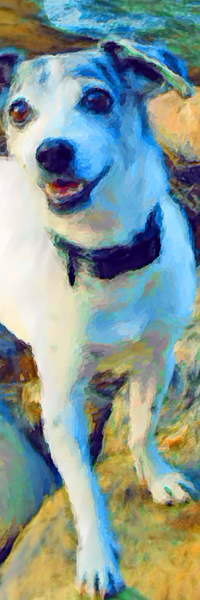 Her book theorizes that the earliest interactions created a powerful chemical feedback system that became genetically advantageous and part of the evolutionary process, taming and, at the extreme level, domesticating the animals that made development possible.
Daley Olmert’s early life was spent in a New York housing project, where she had no pets, but a definite “way” with animals. She went from working as a veterinary technician to writing National Geographic documentaries and to a show that examined the ways wild animals assist humans.
After learning about oxytocin in people, she participated in a University of Maryland study of the hormone. At the same time, a flood of studies showed oxytocin stimulates the cortices that control emotions, quiet fears and can switch off the powerful defence system known as “fight or flight.”
It isn’t voluntary, which is why our species survives, and it isn’t specific, making “beauty” literally in the eye of the beholder, Daley Olmert says. “If you perceive something as being not threatening and attractive, it will release this chemistry.”
That chemistry makes us comfortable, prompting us to be gregarious and enter social relationships, animal or human, she says.
So it’s not “unconditional love,” as so many animal lovers cite for the reason they’re devoted to their pets. “It’s highly conditioned by this chemistry,” Daley Olmert says.
“Studies have shown that human and animal contact, specifically with people and dogs, almost doubles levels of oxytocin and serotonin,” she says. “At this point, it appears that our pets are the most powerful releasers of oxytocin in our brains and that could account for the fact that when your pet dies, you feel like a cannonball got fired through you.”
Urbanization is another reason we need our pets so badly, the book says. Farms kept us steeped in oxytocin for 10,000 years. We relied on animals for everything from heat to strength to food, maintaining a critical feedback system.
It has taken only 100 years for most of us to leave farm life. There has also been a dramatic increase in psychological problems, anxiety, depression, attention deficit, hypertension and stroke, Daley Olmert points out. Coincidence?
“These are all the type of psychological and physiological effects you would expect to see (with oxytocin deprivation),” she says. “I would extend that to the care and emotions being lavished on pets. It’s a natural corrective.
“(Pets) certainly have stepped in to fill the loneliness void that modern society has created,” she says.
———————–
We can relate so strongly to this, especially the part about feeling like a cannon ball has been fired through you when your pet dies. It’s been a year since we lost Kylie and we still feel so empty without her.
From Discovery News Online:
In the past few days, several organizations have joined forces to create the Animal Relief Coalition for Haiti (ARCH), with the goal of raising funds to help animals in the earthquake-stricken country and to provide direct aid to animals once rescue teams can be assembled in Haiti.
The ASPCA is the latest to join.
In addition to the American Society for the Prevention of Cruelty to Animals, ARCH now includes The International Fund for Animal Welfare, the World Society for the Protection of Animals, American Humane, Best Friends, The Humane Society of the United States and Humane Society International.

..Read the whole story here, and please donate if you can to any of these animal welfare organizations to help the animals of Haiti.
According to The Daily Camera online, based here in Colorado, 80% of pet parents now report buy holiday gifts for their dogs and/or cats.:
It’s that time of year when the furry, four-legged friends get extra treats and jingle bells on their collars, and dogs 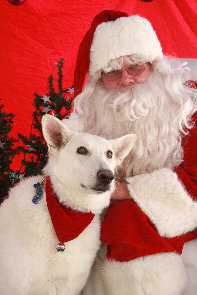 even get a pass if they lift their legs indoors (because, hey, somebody put a tree in the living room).
Eight in 10 pet owners say they give their pets holiday and birthday gifts, according to a survey from the American Animal Hospital Association. Another 21 percent sometimes dress their pets, according to the association.
Marc Bekoff, a research scholar at the Institute for Human-Animal Connection at the University of Denver, said pets love the extra attention around the holidays, as their guardians tend to spend more time around the home.
“They don’t know it’s the holiday season, but they know something special is going on,” Bekoff said. “It’s a great time for bonding with your family .. it’s acknowledging that these animals have emotions and feelings. You want to treat them well, and by treating them well, you feel good.”
—————-
So join the crowd, spend time with your furry family members this holiday season!
Wow! We’ve been so busy working on holiday orders that we almost forgot how quickly the holidays are approaching.. it’s almost Thanksgiving already!
So let’s talk turkey… let’s talk about ordering deadlines for Christmas gifts for the pet lovers on your list.
We want to give you as much time as possible to get your order in, but unfortunately we can’t create a custom work of art from your pet’s photos overnight. So please be aware:
November 30th is the last day to order a stretched portrait and ensure delivery by Christmas Eve.
December 7th is the last day you can order a rolled portrait and have it delivered in time for the holiday.
December 14th will be the last day we can accept orders and provide you with online proofs by the 24th.
PLEASE NOTE – you must have a suitable photo for us to work with for your portrait at the time you place your order.
Of course we encourage you not to wait until the last minute, place your order today and give the unique gift of art this Christmas. Santa Claus will be proud of you!
Check out this urgent alert from the ASPCA about what you can do to help support a bill to allow tax deductions for pet care costs – up to $3500/year!:
Introduced by Rep. Thaddeus McCotter, H.R. 3501—known as the Humanity and Pets Partnered Through the Years (“HAPPYâ€) Act—is a federal bill that would reward responsible pet parents by allowing them to keep more money in their pockets come tax time.
We all want to give our animal companions the best care we possibly can, but it seems that pet care costs are always on the rise—and these days, it’s harder than ever to stretch the family budget. That’s why the ASPCA supports H.R. 3501, which would amend U.S. tax code to allow qualifying pet care expenses, including veterinary care, to be tax-deductible.
This means that when you prepare your income taxes, money you spent on pet care that year would count as non-taxable income—and you can deduct up to $3,500 per year!
Please help us support the HAPPY Act, H.R. 3501.
—–
What an awesome idea! Finally the democratic process pays off for pet lovers!
Dogster.com consulted San Francisco based professional pet photographer, Mark Rogers to provide this list. And since we’re frequently giving our clients advice on how to take good quality photos, we thought we should share it:
Other than baby photos, pictures of pets are among the most popular in any household. Unfortunately, they also tend to suffer the most from poor quality or, as we term it in the trade, snapshot-itis. You may have this problem if friends start walking away fast when you mention the latest photos of your cat or if your dog’s loving brown eyes end up glowing green like some malevolent demon in every shot you take.
Well, here are 5 surefire tips to help avoid snapshot-itis
1) Change angles
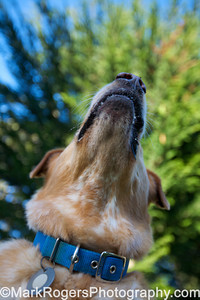 Most pet photos are taken from the perspective of a human being looking down while the pet looks up. Bor-rinnnnnng! Try something different and get down at their level or, if they’re moving, pan with them as you take the shot.
2) Stick with natural light. Turn off or cover the on-camera flash
On-camera flashes are evil. They flatten everything out, cast harsh shadows and are the source of the infamous glowing green pet eyes. If you have to use a flash go with an off-camera one and bounce the light off a ceiling or wall.
3) Stay out of direct sun and shoot in the morning or late afternoon
Contrary to popular belief, bright sunlight is not a photographers friend. It wreaks havoc with your exposure and you typically end up with lots of nasty shadows in places you don’t want them. I avoid photographing subjects outside in direct light except first thing in the morning or in the late afternoon before sunset when the light is angled low.
4) Don’t wait for the perfect moment and don’t be afraid to take lots of shots but…
Most of us are shooting digital these days so you can essentially take as many pictures as you want. With pets, unpredictability is the rule of law. You never know how a shoot is going to go. All you can do is be there and hope you catch the moment. This requires taking a lot of shots in quick sequence and culling through them later for the best one.
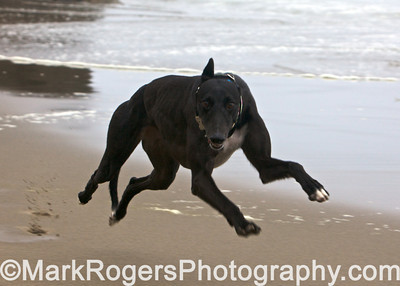
5) …make sure you edit yourself
Some of the most important work happens after you shoot. It sounds cliche but less is more. It’s easy to become enamored of the 100 pictures you took of Spot playing with his new ball but chances are your friends won’t feel the same way. Limit what you show people to only the very best.
———–
We also have a set of Photo Tips designed to help you take an ideal picture of your pet for the purpose of having on of our custom pet portraits created. Some of the suggestions are similar and some are quite different from these. Be sure and check them out if you’re considering a portrait for yourself or a gift!

