Archive for the ‘News & Tips’ Category
A great reason actually.. Did you know that spaying or neutering your pet may actually help your pet live a longer, healthier life? According to this article from the NY Times, there are multiple direct and indirect benefits of spaying and neutering:
Giving Pets Long Lives
Q. Do dogs and cats that have been spayed or neutered live longer?
A. “No definitive studies have shown evidence of the extension of life†just from sterilization, said Brenda Griffin, director of clinical programs in shelter medicine at the School of Veterinary Medicine at Cornell. “But the diseases it prevents are very common.â€
Also, she said, “Two studies have found that the No. 1 risk factor for a pet being taken to shelter is that it has not been spayed or neutered.â€
The many known health benefits for male and female dogs and cats vary by gender, Dr. Griffin said.
“If it is done before she comes into heat, spaying virtually eliminates the risk of breast cancer, the most common type of cancer†in female dogs, she said. In female cats, too, breast tumors are common, and 90 percent of them are malignant. But a cat spayed before age 2 is one-seventh as likely to develop them.
Spaying also prevents ovarian or uterine cancer, uterine infections and other diseases. And it cancels the risks associated with giving birth.
In dogs and cats, males that have not been neutered are at risk for testicular cancer, prostate disease and hernias, among other problems. Neutering also often reduces fighting, roaming and scent marking, behaviors that may land a pet in a shelter, where euthanasia is a risk.
The most recent age recommendation for spaying cats is down to 5 months from 6. That is because female cats are sexually mature and may even have had litters by 6 months. An unplanned pregnancy puts both mother and kittens at risk of being sent to a shelter.
We’ve got some amazing animals here in Colorado, and I’m not just referring to the moose, the wolves, and the bears! The story of Lulu who survived an explosion is all over the news here and has now gone national. Below is the story from Yahoo.
A dog was found alive and in relatively good shape after spending eight days trapped in the rubble of a building that exploded, critically injuring the pup’s owner.
Lulu, a Springer spaniel, was rescued Sunday after the owner of the business that had been housed in the two-story building heard her whimpering.
“We turned off the radio and started calling out Lulu’s name. Then we heard some yelping,” Brian Holt, owner of Good Times Adventures, told the Summit Daily News in Tuesday’s editions.
Lulu’s owner, Brian Mislanski, had been critically injured in the April 19 explosion and remained at St. Anthony Central Hospital in Denver on Tuesday.
“I’m happy,” Mislanski told The Associated Press on Tuesday. He declined to comment further, but friends who are caring for Lulu said they took her to visit him — with permission from the hospital.
Veterinarian Christine Murphy said Lulu suffered mild dehydration and had some trauma to her left eye. She probably survived by drinking melting snow and eating food she found in the debris, Murphy said.
Good Times Adventures is a snowmobiling and dogsledding business. Mislanski, a company van driver, was house-sitting for managers who lived in the upstairs apartment when the building exploded.
Holt said he was sorting through about 6,000 square feet of rubble from the explosion when he heard Lulu.
“After 45 minutes of frantic digging, we found her laying in a crawl space under 15 feet of rubble,” he said. “She basically had a two-story building on top of her.”
You’d never know it by looking at this picture, taken just a few months ago, but our little Kylie is going to be
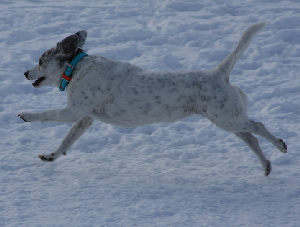
15 this week! Like many senior dogs, Kylie does have a touch of arthritis. We are avoiding putting her on a daily prescription because we want to avoid the potential side effects. We attribute her continued level of activity to the supplements we’ve added to her diet for years now, Glucosamine and Chondroitin, and the low-impact exercise she gets swimming every week. And we’re always on the lookout for the latest information and suggestions on how to keep Kylie active.
Now, based on our Vet’s recommendation we just added a supplement called Duralactin, which is dried milk protein – we’ll see how that goes. When the package of Duralactin arrived, it included 12 tips to help your arthritic pet so once again we decided to pass them along.
- Slip-free flooring
- A soft bed
- Ramps or cubes
- Glucosamine and Chondroitin
- Peace and quiet
- Massage
- Gentle, regular exercise
- Weight control
- Swimming
- Heating pads
- Proper grooming
- Omega fatty acid supplements
We will very soon be facing the always dreaded, moving. And we know from past experience that it can be very stressful on our little dog, Kylie, so we found the following list helpful. It provides ten tips to make your move a smooth transition for your dog or cat, so we thought we would share it with you.
1. Dogs adapt quicker than cats to their new surroundings but both can still be very excitable. Keeping pets out of the way during the move with a friend or relative can often be for the best as the sight of its owner packing can be very worrying. If this is not possible, keep them close by in a quiet room, preferably with their bed and a few toys.
2. Many pets do not travel well, so it’s a good idea to get them used to it prior to the move by taking them on short journeys in the car. Also help to reduce the chances of car sickness by not feeding your pet for 12 hours before the move.
3. Every year many animals are lost when their owners move house, so all identification tags will need to have your new address and phone numbers on. Collars should be kept on at all times just in case they get lost and try to return back to your old house.
4. When arriving at the new house, wait until everything is indoors before bringing your pet in. The idea is to keep everything looking as normal as possible.
5. The sight of familiar things, such as toys, baskets or a favourite rug, can be very comforting to animals on arrival in their new home, but your pet will still take time to adjust and will need plenty of attention as a result.
6. Cats have a habit of wandering off, so a travel basket could be the ideal solution. Your movers may be able to hire or lend you one. Try and have your cat inside the basket before the removal men arrive.
7. Smaller animals are much easier to transport, but still need to be well prepared for the move. Caged birds will normally travel quite well and will be happy with you in the car, but the journey needs to be short and they need food, water and ventilation.
8. Fish should be taken out of their tank and put into a proper container designed for their transport. These are available from any good pet shop. The fish tank should then be emptied, dried and protected with polystyrene packing for the journey.
9. Small animals like guinea pigs, hamsters and rabbits are best transported in well ventilated “chew-proof” containers made of metal or rigid plastic. Give them plenty of bedding, a little food, and water throughout.
10. If your move is set to take you overseas find a reputable professional moving company for specialist advice.
We found these in the most recent issue of Doggie Aficionado, and since we’re constantly campaigning for our pet parent friends and clients to take more pictures of your pet, we thought we should pass them along.
These tips are definitely directed at taking photos for the family album, which is great, but we thought we should add some suggestions for taking a perfect picture for a custom portrait of your dog (or cat).
(1) Have one of your dog’s favorite toys on hand. – Not only can toys keep him or her occupied between shots, you can also capture some fun shots of your pet at play.
* For a great portrait you can use your dog’s favorite toy to get their attention, and if you can make it squeak you may even get the ever-popular head tilt. Although it our experience, treats typically work better for this. And we’re not talking about some old dry milkbones, if you want a big smile try some sliced cheese or sausages!
(2) Use the right lighting to reduce animal red eye, which is more likely green or yellow. – Red eye is worse when you’re using your camera’s built-in flash, so try to use natural lighting whenever possible. When natural light is not an option, use the brightest, indirect light available indoors.
* We also tell our clients that lighting is key and that natural lighting is best. Good lighting results in great contrast and the best chance for your photo to be well focused. The best way to take your pet’s picture with sufficient natural lighting is outside but not in direct sunlight, so a cloudy day or shortly after sundown are ideal.
(3) Be prepared to use a relatively fast shutter speed. – You know your pet loves to move, so unless you want tocapture him or her as nothing more than a blur, you’ll need a fa st shutter speed to freeze the animal’s motion.
* Most people don’t really deal with shutter speed at all these days especially with digital cameras. Our most important requirement where camera settings are concerned, is always use the highest quality / largest file size setting so we can work with a really big image.
(4) Don’t photograph your pet from human eye level. – Avoid this extreme angle by lowering your tripod or sitting on the floor to shoot from your pet’s eye level. This is the best way to capture their true personality.
* We totally agree! When was the last time you saw a portrait of a person looking up?
(5) Try taking a picture of a family memeber holding your pet. – Try to capture the loving interaction between you and your dog or cat, it makes a really touching shot. Plus it allows you to help hold them still!
* Yes this can make for a memorable moment in your scrapbook, but for a portrait it’s best to let your pet pose alone. If you really need human intervention to keep them calm, have them sit while an assistant keeps a hand on their back. As long as nobody is in front of them, obstructing the photo then we can probably remove them from the background.
We provide lots more helpful suggestions for snapping and/or selecting a great shot of your pet for a portrait on our Photo Tips page, and again remind you that you can never have too many pictures of your pet!
Around here we are huge believers that a healthy diet is the key to your pet’s overall health and long life – and nothing is more important around here than Kylie’s health and long life! That’s why we were very happy a couple of years ago when we found “The Honest Kitchen” pet food. It’s an all-natural, dehydrated, raw food made with human grade ingredients. Kylie loves it, she even wrote about it in her blog! I can’t tell you what a relief it was during the pet food recall crisis last year to have the peace of mind of knowing we didn’t have to worry. We recommend it to all our pet parent friends.
So we were very happy to find this article on slashfood.com which furthered our positive feelings about The Honest Kitchen:
For the folks at The Honest Kitchen, quality control means tasting your own product – even though it’s marketed for the four-legged crowd.
The company’s employees attend weekly meetings – often with their dogs poised by their sides – where both humans and animals carefully taste both individual dehydrated bits of the organic dog and cat food mixture, as well as the final product, to make sure the pets are getting nothing but the best.
The company got the OK from the FDA to use the term “Human grade pet food” on all of its labels. According to a rep from the company, the food is “probably a little bland by most human standards,” but compared to what they imagine ordinary pet food to taste like, “really quite delicious!” (That answers the next obvious question: do the testers taste their competitors’ food, too?)
Even the packaging is appealing and atypical for animal food – multicolored boxes with enticing names like “verve,” “force,” and “embark” that aren’t a far reach from the packaged granola available for humans. They also make treats and supplements.
Yes, it sounds a bit odd at first, but after the recent horrific incidents of dogs becoming ill from tainted dog food, it’s nice that a company takes this much care in producing a quality, safe product for their best buds.
They’re arriving by the thousands every month, homeless, hapless victims of foreclosure. Family pets, their lives upended by the ravaged finances of their owners, are landing in animal shelters in large numbers in some parts of the country.
The precise numbers are unknown, because there is no nationwide standard for recording foreclosure pets and because many owners who surrender animals at shelters tell personnel only that they are “moving” and give no specifics.
But shelters that are experiencing an increase in pet intakes are almost without exception in areas where the foreclosure rate is high. Now there’s growing concern that another, perhaps bigger wave of pet surrenders is in the offing, the result of the worsening economy and growing joblessness that will affect additional homeowners as well as renters.
“The fate of people’s pets tracks with their own financial fate,” says the ASPCA’s Steve Zawistowski. He adds that although some shelters have been largely unaffected, “there are pockets” where so many homeowners are losing their homes that the number of pets relinquished to shelters, turned loose or abandoned is increasing dramatically. The pockets probably will spread with a deteriorating economy, he says.
Source: USA TodayÂ
The Hartz Mountain Corp. of Secaucus, N.J., is voluntarily recalling a second specific lot of Hartz Vitamin Care for Cats due to concerns that bottles within the lot may have been potentially contaminated with Salmonella.
The product involved is 739 bottles of Hartz Vitamin Care for Cats, lot code SZ 22771, UPC number 32700-97701.
Recent sampling conducted by the U.S. Food and Drug Administration detected the presence of salmonella, although it had not been detected under normal testing by Hartz and manufacturer UFAC (USA) Inc.
Hartz recalled a specific lot code of the vitamins late last year due to similar concerns. Both lot codes were manufactured by UFAC in 2007 and were removed from distribution last November. However, bottles from the second lot had been shipped to customers prior to it being removed from distribution.
At press time, the company had not received any reports of animals or humans becoming ill.
Hartz is offering reimbursement for purchased products. For details, contact Hartz at 800-275-1414.
Source: Pet Product News
A firefighter in West Monroe, LA performed CPR on a dog, saving its life after responding to a mobile home fire. When firefighters arrived at the scene, a resident of the house approached firefighter Stephen “Odie” Odom and told him two dogs were trapped inside the burning house.
Odom put on his air pack and headed for the room where the two small dogs were kept.
After searching through a smoke-filled bedroom, Odom located the two terrier dogs in carriers underneath some blankets and removed them from the burning home.
When Odom removed one of the dogs from the carrier, he noticed it was not breathing and his tongue was hanging out. The firefighter removed his face mask and placed the dog’s head inside so the oxygen could blow in its face.
When this didn’t work, Odom began performing CPR on the dog by “cupping my hands around the dog’s snout and blowing until I could feel his chest expand,” he said.
“I then did chest compressions similar to that of infant CPR. After approximately one minute of doggie CPR, I noticed the dog trying to breathe on its own.”
Five minutes later the dog began looking around and was given to the owner of the house, Linda Lewis. An oxygen tank was left with the pup.
Fire Prevention Officer Curt Meachum said he is glad the dog’s life was spared. We do not know the dog’s name, but we could just call it ‘Lucky,'” Meachum said.
Source: Yahoo News
Zoombak, a new device introduced at last month’s Global Pet Expo, uses high tech to keep free-wheeling dogs in check. You strap the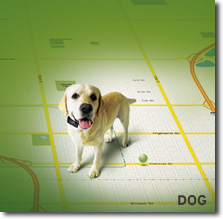 lightweight locator device on your dog’s collar, set up the quadrants of your neighborhood’s safe zone on the Web, and then create a notification tree of yourself, other family members or neighbors. The device incorporates Advanced GPS , which uses satellite and cellular technologies, to locate your dog when he leaves the safe zone. Then you get an email alert or a text message on your phone, such as “Lucky has left the zone. Here is where he is now.”
The rechargeable Zoombak locator (which weighs 2.5 ounces and comes in a water-resistant pouch) is made for pets about 15 pounds and over. A smaller version is in the works, which will work for small dogs and possibly some cats, according to Michael Glickman, spokesman for Zoombak.
The device retails for about $199 and has a monthly service fee of about $10 a month. It will be available at Petco and PetSmart in March. Or go to www.zoombak.com.

